2020年3月23日星期一

What about the new coronavirus COVID-19

The advice many people will hear now is to be more ventilated, wash your hands frequently, avoid partying, and wear a mask. why? Because now the world is suffering from the new coronavirus COVID-19. What is a coronavirus? Coronavirus can cause respiratory infections in humans. The previous case was SARS, now called COVID-19. Its main transmission method is coughing and sneezing between people, close contact with infected people or contact with infected surfaces. Then spread through mouth, nose or eyes. Coronavirus can produce a range of symptoms, including fever, cough, shortness of breath, sore throat, and runny nose. When you encounter these symptoms, don't be nervous. You will not know the results until you go to the hospital for an examination. It may be just a common disease.

​What about the new coronavirus COVID-19
New coronavirus outbreaks occurred in Wuhan, China, and in the face of this situation, the Chinese people are always positive. Because the new coronavirus is transmitted through the mouth, nose, or eyes, in China we require that people not be isolated at home, ventilated, wash their hands frequently, and go out without a problem. Wear a mask to prevent new coronavirus. Now in China, we have stabilized the new coronavirus. From the cumulative diagnosis of 81623 to the present, there are only 5504 confirmed diagnoses. Under such a trend, I believe China will soon win the war against viruses.
But people in many countries are also infected with the new coronavirus, and the trend is very rapid. Excluding China, there are now more than 200,000 diagnosed patients, so many countries have also developed appropriate responses to prevent new coronaviruses after gaining experience in Chinese cases. This is a struggle between humans and viruses. No one can avoid it. We should all face it. Sooner or later, we humans will be victorious. For example, SARS came so fast, but in the end, we humans won.
In the face of the virus, we should not panic. We should maintain a good attitude. From the current data, the chances of cure are very high, and as long as the precautionary measures are done well, the virus will not approach us. We must believe that we can defeat this war perfectly . Let's cheer together.

2020年3月18日星期三

Amazon bans unnecessary items in its warehouse

Amazon is banning its warehouses from stocking nonessential items during the coronavirus pandemic. The online retail giant is placing restrictions on the types of merchandise it will carry in its warehouses through April 5.
Faced with merchandise shortages in the United States and Europe due to the Covid-19 coronavirus pandemic, Amazon has instituted sweeping changes on which products it will store and ship from its warehouses over the next three weeks, in a move it said was aimed at keeping essential items in stock and speeding up orders.
​ Amazon bans unnecessary items in its warehouse
Early Tuesday morning, Amazon said it would be “temporarily prioritizing household staples, medical supplies, and other high-demand products coming into our fulfillment centers so that we can more quickly receive, restock and deliver these products to customers.”
By “prioritizing,” Amazon means it will no longer accept new shipments to its warehouses for discretionary items through April 5. During that time, Amazon will continue to sell all types of products on its websites, but sellers listing discretionary items will have to store and ship them on their own if they aren’t already in, or on their way to, an Amazon warehouse as of Tuesday.
The company said most of the products it was still accepting from third-party sellers and wholesale vendors fall into one of six categories: baby products, health and household, beauty and personal care, grocery, industrial and scientific, and pet supplies. The messages were sent to third-party sellers who store goods in Amazon warehouses through the Fulfillment by Amazon program, as well as wholesale vendors who sell goods directly to Amazon, which then resells those goods to customers.
“We are seeing increased online shopping, and as a result, some products, such as household staples and medical supplies, are out of stock,” an Amazon spokesperson said in a statement.
“We understand this is a change for our selling partners and appreciate their understanding as we temporarily prioritize these products for customers,” the spokesperson added.
With governments across the globe recommending and even mandating that people stay inside during the pandemic, more shoppers are turning to Amazon to stock up rather than visiting brick-and-mortar stores. But the rush of shopping in select categories has meant frequent out-of-stock messages for items ranging from hand sanitizer and hand soap to face masks, as well as sellers taking advantage of low supply by attempting to price-gouge customers.
We will definitely survive the Covid-19 Coronavirus pandemic, and trust our medical institutions, come on.
Yeahui is a connector supplier with 11 years of experience in developing high quality connectors and wiring harnesses. wo have many types of products, including obd connector, circular connector, agricultural connector and so on.We can meet the requirements of various customers. Feel free to learn more about connectors or buy our connectors,looking forward to your message.

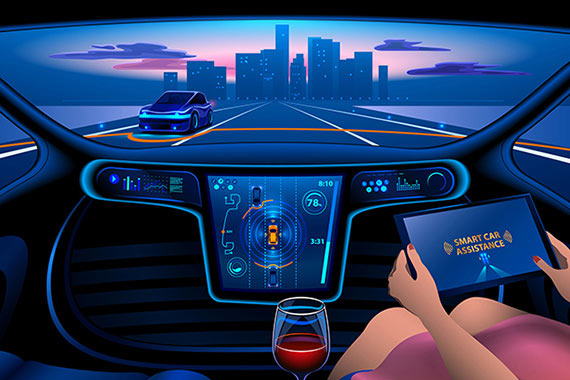
​Artificial Intelligence Drives Autonomous Cars

For an automobile to be autonomous, it needs to be continuously aware of its surroundings—first, by perceiving (identifying and classifying information) and then acting on the information through the autonomous/computer control of the vehicle. Autonomous vehicles require safe, secure, and highly responsive solutions which need to be able to make split-second decisions based on a detailed understanding of the driving environment. Understanding the driving environment requires an enormous amount of data to be captured by myriad different sensors across the car, which is then processed by the vehicle's autonomous driving computer system.
​Artificial Intelligence Drives Autonomous Cars
For the vehicle to be truly capable of driving without user control, an extensive amount of training must be initially undertaken for the Artificial Intelligence (AI) network to understand how to see, understand what it's seeing, and make the right decisions in any imaginable traffic situation. The compute performance of the autonomous car is on par with some of the highest performance platforms that were only possible just a few years ago.
The autonomous vehicle is projected to contain more lines of code than any other software platform that has been created to date. By 2020, the typical vehicle is expected to contain more than 300 million lines of code and will contain more than 1 TB (terabytes) of storage and will require memory bandwidth of more than 1 TB per second to support the compute performance necessary for autonomous driving platforms.
A self-driving car's AI system requires a continuous, uninterrupted stream of data and instructions in order to make real-time decisions based on complex data sets. Successful self-driving vehicles exist on the road today, however the success of many of these early vehicles is the result of repeatedly driving the same route consistently over many days, where they learn every detail of the route and generate high-resolution maps that are then used as a key part of the self-navigation system.
With less reliance on needing to recognize the route, the attention of the autonomous computer can be paid to traffic, pedestrians and the other potential real-time hazards. This generally restricted range of operation is referred to as geo-fencing, and reflects the approach that early self-driving vehicles are embracing in deploying vehicles that are truly driverless. While geo-fencing can lead to a solution that can work over a limited route, an autonomous vehicle with heavy reliance on geo-fencing in one part of the world may not function as well in another.
Under the influence of self-driving, many industries have been rapidly developed. As connectors are necessary for system equipment, the demand will also increase.Yeahui is a connector supplier with 11 years of experience in developing high quality connectors and wiring harnesses. wo have many types of products, including obd connector, circular connector, agricultural connector and so on.We can meet the requirements of various customers. Feel free to learn more about connectors or buy our connectors,looking forward to your message.

2020年3月12日星期四

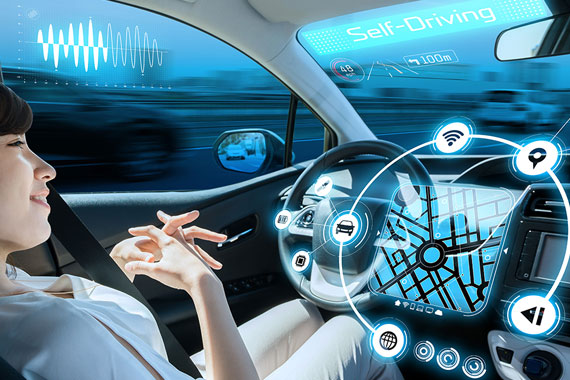
What does a world with self-driving cars look like

Companies continue to invest despite the setbacks because self-driving cars, when they happen, will change a lot for the world — and make their creators lots of money.
Many consumers will want to upgrade. Imagine being able to read or doze off during your morning drive to work or on long car trips. It also seems likely that taxi and ride-hailing companies will offer self-driving cars, rather than paying drivers (in fact, companies like Uber are betting on it). Self-driving cars should also make a huge difference for Americans with disabilities, many of whom can’t get a driver’s license and have trouble getting to work, the store, and doctor’s appointments.
​What does a world with self-driving cars look like
Experts disagree on whether self-driving cars will change anything fundamental about car ownership in America. Some argue that people won’t need to own a car if they can order one on their phone and get a timely robot ride anywhere.
Others have pointed out that people generally still own a car even in areas with good ride-share coverage and that self-driving cars might not be any different. Polls suggest that most Americans don’t want to be driven to work by a self-driving car — but that might change fast once such cars actually exist. Gallup polling on this question found a small share (9 percent) of Americans who’d get such a car right away, with a larger contingent (38 percent) saying they’d wait a while, and half holding steadfast that they’d never use one.
Over time, our infrastructure will likely change to make it easier for self-driving cars to navigate, and in fact, some researchers have argued that we won’t have widespread self-driving cars until we’ve made major changes to our streets to make it easier to communicate information to those cars. That would be expensive and require nationwide coordination, so it seems likely that it would follow the widespread introduction of self-driving cars rather than precede it.
Under the influence of self-driving, many industries have been rapidly developed. As connectors are necessary for system equipment, the demand will also increase.Yeahui is a connector supplier with 11 years of experience in developing high quality connectors and wiring harnesses. wo have many types of products, including obd connector, circular connector, agricultural connector and so on.We can meet the requirements of various customers. Feel free to learn more about connectors or buy our connectors,looking forward to your message.
More about self-driving(How exactly do self-driving cars work).

2020年3月11日星期三

How exactly do self-driving cars work

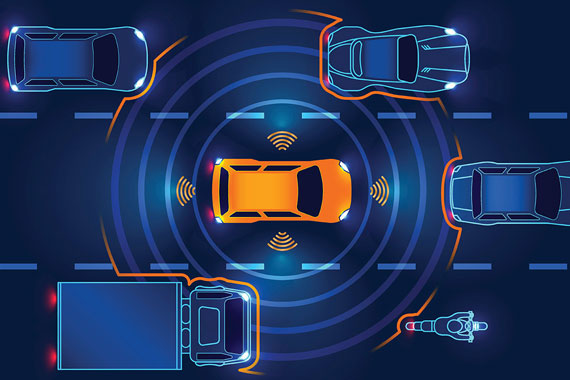
Engineers have been attempting prototypes of self-driving cars for decades. The idea behind it is really simple: Outfit a car with cameras that can track all the objects around it and have the car react if it’s about to steer into one. Teach in-car computers the rules of the road and set them loose to navigate to their own destination.
​How exactly do self-driving cars work
This simple description elides a whole lot of complexity. Driving is one of the more complicated activities humans routinely do. Following a list of rules of the road isn’t enough to drive as well as a human does, because we do things like make eye contact with others to confirm who has the right of way, react to weather conditions, and otherwise make judgment calls that are difficult to encode in hard-and-fast rules.
John Krafcik, CEO of Waymo, presents a self-driving car at Wed Summit in Lisbon, Portugal, on November 7, 2017.
And even the simple parts of driving — like tracking the objects around a car on the road — are actually much trickier than they sound. Take Google’s sister company Waymo, the industry leader in self-driving cars. Waymo’s cars, which are fairly typical of other self-driving cars, use high-resolution cameras and lidar (light detection and ranging), a way of estimating distances to objects by bouncing light and sound off things.
The car’s computers combine all of this to build a picture of where other cars, cyclists, pedestrians, and obstacles are and where they’re moving. For this part, lots of training data is needed — that is, the car has to draw on millions of miles of driving data that Waymo has collected to form expectations about how other objects might move. It’s hard to get enough training data on the road, so the cars also train based on simulation data — but engineers have to be sure that their AI systems will generalize correctly from the simulation data to the real world.
That’s far from a complete description of the systems at work when a self-driving car is on the road. But it illustrates an important principle to keep in mind when wondering where our self-driving cars are: Even the “easy” things turn out to hide surprising complexity.
Under the influence of self-driving, many industries have been rapidly developed. As connectors are necessary for system equipment, the demand will also increase.Yeahui is a connector supplier with 11 years of experience in developing high quality connectors and wiring harnesses. wo have many types of products, including obd connector, circular connector, agricultural connector and so on.We can meet the requirements of various customers. Feel free to learn more about connectors or buy our connectors,looking forward to your message.

How 5G and IoT will affect the auto industry

Autonomous cars (and other vehicles, such as trucks) may still be years away from widespread deployment, but connected cars are very much with us. The modern automobile is fast becoming a sensor-laden mobile Internet of Things device, with considerable on-board computing power and communication systems devoted to three broad areas: vehicle location, driver behaviour, engine diagnostics and vehicle activity (telematics); the surrounding environment (vehicle-to-everything or V2X communication); and the vehicle's occupants (infotainment). All of these systems use cellular -- and increasingly 5G -- technology, among others.
​How 5G and IoT will affect the auto industry
Although 5G networks are still a work in progress for mobile operators, the pace of deployment and launches is picking up. By the end of 2019, according to the GSA (Global mobile Suppliers Association), 61 operators in 34 countries had launched one or more 3GPP-compliant 5G services. Of those, 49 operators had launched 5G mobile services, while 34 had launched FWA (Fixed Wireless Access) or home broadband services. Furthermore, the GSA said, 77 operators had deployed 3GPP-compliant technology in their networks and 348 operators in 119 countries were investing in 5G.  
3GPP Release 16, which is due to be finalised by mid-2020, is an important milestone because it completes phase 2 of the 5G specification, catering for standalone networks that deliver not only enhanced mobile broadband (eMBB) and FWA, but also ultra-reliable low-latency communication (URLLC, important for automotive use cases) and massive machine-type communication (mMTC, important for IoT use cases). Rel 16 also includes specifications around cellular V2X (C-V2X), covering areas like platooning, extended sensors, automated and remote driving.
Work is now underway on Rel 17, which will include: enhancements to low-power wide-area connectivity (NB-IoT); a new feature called NR Light, which will cater for low-power/high-bandwidth wearable and IoT devices; support for millimetre-wave spectrum above 52.6GHz; MIMO enhancements; and support for non-terrestrial (satellite) networks.
Under the influence of 5G and the Internet of Things, many industries have been rapidly developed. As connectors are necessary for system equipment, the demand will also increase.Yeahui is a connector supplier with 11 years of experience in developing high quality connectors and wiring harnesses. wo have many types of products, including obd connector, circular connector, agricultural connector and so on.We can meet the requirements of various customers. Feel free to learn more about connectors or buy our connectors,looking forward to your message.

2020年3月10日星期二

The impact of 5g and iot on smart cities

Smart cities is another sector already benefiting from the impact of 5G and IoT.  
"I used to have a guy come and measure my water meter manually; now they're installing systems so that you can do this remotely," said iBASEt's Poonian. "With my gas meter, I'm now starting to get data analytics on how I'm performing against my peers and trying to create cost-saving programs."
​ The impact of 5g and iot on smart cities
While that's a current use case, IoT endpoints will become even more powerful with 5G connectivity, allowing for more insights across greater distances. For example, using crowdsourced information, the technology can evaluate traffic patterns throughout the city and direct crowds to open parking garages via apps in their cars, Patron said.
"Think of silly situations like big football games where everyone is struggling to find a parking place, particularly in city centers where there's not a lot of parking," Patron said. "Or think of much more dire situations like storms or natural disaster. [5G and IoT] could redirect people and even control the streetlights for evacuations."
The collaboration between 5G and IoT will not only help develop existing projects, but will create use cases never before considered.

The impact of COVID-19 on the economy

The pandemic has shone a light on a deeply divided workplace: the highly paid, salaried graduate elites on one side, and the workers in dea...